CANADA - Stephen Harper is ripping off Ontario and the price tag is $11.8 billion.
After years of refusing to say exactly how much he'd like to shrink the gap of up to $23 billion between what Ontarians send to Ottawa in taxes and is returned in federal funding, Premier Dalton McGuinty has finally named his price.
The magic number is contained in a report this week by TD Bank chief economist Don Drummond did some calculations to come up with the number.
"There may be a compelling story of 'discrimination,'" Drummond wrote.
McGuinty hailed Drummond as "an independent third party" and said the money would go a long way to cushioning Ontario's struggling economy.
"If we had $11.8 billion here, we wouldn't be talking about a struggling economy," the premier told reporters. "We'd have a lot more resources to put into infrastructure."
But McGuinty said he doesn't expect federal party leaders — who have so far turned a tin ear to his fairness campaign — to ante up cash with the Oct. 14 election date approaching.
"I don't think anybody's looking for any of the folks at the federal level to say 'here's $11.8 billion.' But we are looking for a public acknowledgment that what we have today is unfair and a genuine desire on their part to sit down and work with us to redress that over a period of time."
McGuinty's demand comes as he is crusading for "fairness" from the federal leaders in the Oct. 14 election.
October 1, 2008


Is Sarah Palin becoming a liability for John McCain?
United States - Only the most avid followers of American presidential politics - or those of a certain age - will remember Thomas Eagleton.
The Missouri senator was George McGovern's vice-presidential candidate for 18 days in 1972. He resigned when it was revealed he'd had electro-shock treatments to deal with his mental health issues - something he'd deliberately kept from his Democratic running mate.
Eagleton was replaced by Sargent Shriver, husband of Eunice Kennedy, and the McGovern-Shriver ticket went on to be roundly defeated by Richard Nixon and Spiro Agnew.
Some have already drawn parallels between Eagleton and Sarah Palin, John McCain's controversial choice as running mate. The Huffington Post's Richard Gizbert referred to her as "Thomas Eagleton: The Sequel" when it was revealed her teenaged daughter was pregnant.
While Palin has no known history of severe mental illness, even the Alaska governor's usual cheerleaders on the right have been turning on her in recent days, including one conservative commentator who urged her to drop out of the race in the wake of a series of cringe-worthy media interviews.
"As we've seen and heard more from John McCain's running mate, it is increasingly clear that Palin is a problem," Kathleen Parker, who once described her candidacy as a "bright light," wrote on the National Review Online.
"Quick study or not, she doesn't know enough about economics and foreign policy to make Americans comfortable with a President Palin should conditions warrant her promotion."
Parker pleaded with Palin to resign by citing family obligations if necessary, telling her: "Do it for your country."
Amid this backdrop, the vice-presidential debate will be held in St. Louis this Thursday, and Republican strategists are said to be beside themselves in their attempts to prepare Palin for the faceoff against Senator Joe Biden.
Ed Schultz, a liberal syndicated talk-radio host, wrote on his blog on the weekend that his sources on Capitol Hill have told him the McCain campaign had held "disastrous" mock debates and a mock news conference with Palin.
"One senior McCain aide was quoted as saying, 'What are we going to do?' The McCain people want to move this first debate to some later, undetermined date, possibly never. People on the inside are saying the Alaska governor is clueless," Schultz wrote.
McCain is continuing to sag in the polls following his much-maligned interference in the bipartisan negotiations in Washington into a proposed $700 billion bailout of the country's failing banks and financial institutions. The deal was finally hammered out early Sunday.
His failure to land any knockout punches against Barack Obama during their own debate Friday night in Mississippi isn't likely to improve his standing in the polls in the days to come.
So could a flailing McCain, seemingly hungry for the White House and known for high-stakes political gambles - including his choice of Palin in the first place - have another surprise up his sleeve by cutting the Alaska governor loose with less than 40 days til the election?
"They've got a real problem," Andrea Mitchell, NBC's chief foreign affairs correspondent, told "The Chris Matthews Show" on Sunday morning.
"She's a big draw in terms of attracting crowds and money ...but if she continues this way, she could cost them this election."
But Stephen Hess, a senior fellow at the Brookings Institute think-tank, doesn't believe that even a daring politician like McCain can dump his running mate now, regardless of how deftly his campaign might make it appear that it's Palin's idea to bail.
"It's not going to happen," said Hess, who worked for the Dwight Eisenhower and Nixon campaigns.
"Presidents, or those who choose to be president, don't like to admit their mistakes, in part because others would take advantage of that. Eagleton was a special case because he hadn't told McGovern anything about his mental health or that he'd had shock treatment, so it was a great embarrassment."
In 1968, Hess was in charge of handling another unpopular vice-presidential candidate - Agnew, the governor of Maryland who was later forced out of the vice president's office when he was charged with accepting bribes and tax evasion.
Hess says he sees more parallels between McCain's problems with Palin and Nixon's issues with Agnew.
"Spiro Agnew was a governor of a relatively small state, and he was someone the candidate did not know, or knew barely, and he chose him for purely political reasons - he wanted someone viewed as more moderate," Hess recalls.
Soon after Nixon chose his running mate, Hess said, Agnew made a number of statements deeply embarrassing to the campaign, the most infamous being his remark when he travelled to Detroit: "You've seen one city slum, you've seen them all."
But Nixon stuck with him, Hess noted.
"Even fully knowing Agnew's problems, except that he was a crook, he ran with him a second term. That's how far presidents will go not to admit their mistakes."
The Missouri senator was George McGovern's vice-presidential candidate for 18 days in 1972. He resigned when it was revealed he'd had electro-shock treatments to deal with his mental health issues - something he'd deliberately kept from his Democratic running mate.
Eagleton was replaced by Sargent Shriver, husband of Eunice Kennedy, and the McGovern-Shriver ticket went on to be roundly defeated by Richard Nixon and Spiro Agnew.
Some have already drawn parallels between Eagleton and Sarah Palin, John McCain's controversial choice as running mate. The Huffington Post's Richard Gizbert referred to her as "Thomas Eagleton: The Sequel" when it was revealed her teenaged daughter was pregnant.
While Palin has no known history of severe mental illness, even the Alaska governor's usual cheerleaders on the right have been turning on her in recent days, including one conservative commentator who urged her to drop out of the race in the wake of a series of cringe-worthy media interviews.
"As we've seen and heard more from John McCain's running mate, it is increasingly clear that Palin is a problem," Kathleen Parker, who once described her candidacy as a "bright light," wrote on the National Review Online.
"Quick study or not, she doesn't know enough about economics and foreign policy to make Americans comfortable with a President Palin should conditions warrant her promotion."
Parker pleaded with Palin to resign by citing family obligations if necessary, telling her: "Do it for your country."
Amid this backdrop, the vice-presidential debate will be held in St. Louis this Thursday, and Republican strategists are said to be beside themselves in their attempts to prepare Palin for the faceoff against Senator Joe Biden.
Ed Schultz, a liberal syndicated talk-radio host, wrote on his blog on the weekend that his sources on Capitol Hill have told him the McCain campaign had held "disastrous" mock debates and a mock news conference with Palin.
"One senior McCain aide was quoted as saying, 'What are we going to do?' The McCain people want to move this first debate to some later, undetermined date, possibly never. People on the inside are saying the Alaska governor is clueless," Schultz wrote.
McCain is continuing to sag in the polls following his much-maligned interference in the bipartisan negotiations in Washington into a proposed $700 billion bailout of the country's failing banks and financial institutions. The deal was finally hammered out early Sunday.
His failure to land any knockout punches against Barack Obama during their own debate Friday night in Mississippi isn't likely to improve his standing in the polls in the days to come.
So could a flailing McCain, seemingly hungry for the White House and known for high-stakes political gambles - including his choice of Palin in the first place - have another surprise up his sleeve by cutting the Alaska governor loose with less than 40 days til the election?
"They've got a real problem," Andrea Mitchell, NBC's chief foreign affairs correspondent, told "The Chris Matthews Show" on Sunday morning.
"She's a big draw in terms of attracting crowds and money ...but if she continues this way, she could cost them this election."
But Stephen Hess, a senior fellow at the Brookings Institute think-tank, doesn't believe that even a daring politician like McCain can dump his running mate now, regardless of how deftly his campaign might make it appear that it's Palin's idea to bail.
"It's not going to happen," said Hess, who worked for the Dwight Eisenhower and Nixon campaigns.
"Presidents, or those who choose to be president, don't like to admit their mistakes, in part because others would take advantage of that. Eagleton was a special case because he hadn't told McGovern anything about his mental health or that he'd had shock treatment, so it was a great embarrassment."
In 1968, Hess was in charge of handling another unpopular vice-presidential candidate - Agnew, the governor of Maryland who was later forced out of the vice president's office when he was charged with accepting bribes and tax evasion.
Hess says he sees more parallels between McCain's problems with Palin and Nixon's issues with Agnew.
"Spiro Agnew was a governor of a relatively small state, and he was someone the candidate did not know, or knew barely, and he chose him for purely political reasons - he wanted someone viewed as more moderate," Hess recalls.
Soon after Nixon chose his running mate, Hess said, Agnew made a number of statements deeply embarrassing to the campaign, the most infamous being his remark when he travelled to Detroit: "You've seen one city slum, you've seen them all."
But Nixon stuck with him, Hess noted.
"Even fully knowing Agnew's problems, except that he was a crook, he ran with him a second term. That's how far presidents will go not to admit their mistakes."
To be creative is, in fact, Canadian
Mr. Harper is wrong: There's more to the arts than a bunch of rich people at galas whining about their grants
Quebec Artists Protest Against Arts Cuts
By Margaret Atwood
What sort of country do we want to live in? What sort of country do we already live in? What do we like? Who are we?
At present, we are a very creative country. For decades, we've been punching above our weight on the world stage - in writing, in popular music and in many other fields. Canada was once a cultural void on the world map, now it's a force. In addition, the arts are a large segment of our economy: The Conference Board estimates Canada's cultural sector generated $46-billion, or 3.8 per cent of Canada's GDP, in 2007. And, according to the Canada Council, in 2003-2004, the sector accounted for an “estimated 600,000 jobs (roughly the same as agriculture, forestry, fishing, mining, oil & gas and utilities combined).”
But we've just been sent a signal by Prime Minister Stephen Harper that he gives not a toss for these facts. Tuesday, he told us that some group called “ordinary people” didn't care about something called “the arts.” His idea of “the arts” is a bunch of rich people gathering at galas whining about their grants. Well, I can count the number of moderately rich writers who live in Canada on the fingers of one hand: I'm one of them, and I'm no Warren Buffett. I don't whine about my grants because I don't get any grants. I whine about other grants - grants for young people, that may help them to turn into me, and thus pay to the federal and provincial governments the kinds of taxes I pay, and cover off the salaries of such as Mr. Harper. In fact, less than 10 per cent of writers actually make a living by their writing, however modest that living may be. They have other jobs. But people write, and want to write, and pack into creative writing classes, because they love this activity – not because they think they'll be millionaires.
Every single one of those people is an “ordinary person.” Mr. Harper's idea of an ordinary person is that of an envious hater without a scrap of artistic talent or creativity or curiosity, and no appreciation for anything that's attractive or beautiful. My idea of an ordinary person is quite different. Human beings are creative by nature. For millenniums we have been putting our creativity into our cultures - cultures with unique languages, architecture, religious ceremonies, dances, music, furnishings, textiles, clothing and special cuisines. “Ordinary people” pack into the cheap seats at concerts and fill theatres where operas are brought to them live. The total attendance for “the arts” in Canada in fact exceeds that for sports events. “The arts” are not a “niche interest.” They are part of being human.
Moreover, “ordinary people” are participants. They form book clubs and join classes of all kinds - painting, dancing, drawing, pottery, photography - for the sheer joy of it. They sing in choirs, church and other, and play in marching bands. Kids start garage bands and make their own videos and web art, and put their music on the Net, and draw their own graphic novels. “Ordinary people” have other outlets for their creativity, as well: Knitting and quilting have made comebacks; gardening is taken very seriously; the home woodworking shop is active. Add origami, costume design, egg decorating, flower arranging, and on and on ... Canadians, it seems, like making things, and they like appreciating things that are made.
They show their appreciation by contributing. Canadians of all ages volunteer in vast numbers for local and city museums, for their art galleries and for countless cultural festivals - I think immediately of the Chinese New Year and the Caribana festival in Toronto, but there are so many others. Literary festivals have sprung up all over the country - volunteers set them up and provide the food, and “ordinary people” will drag their lawn chairs into a field - as in Nova Scotia's Read by the Sea - in order to listen to writers both local and national read and discuss their work. Mr. Harper has signalled that as far as he is concerned, those millions of hours of volunteer activity are a waste of time. He holds them in contempt.
I suggest that considering the huge amount of energy we spend on creative activity, to be creative is “ordinary.” It is an age-long and normal human characteristic: All children are born creative. It's the lack of any appreciation of these activities that is not ordinary. Mr. Harper has demonstrated that he has no knowledge of, or respect for, the capacities and interests of “ordinary people.” He's the “niche interest.” Not us.
It's been suggested that Mr. Harper's disdain for the arts is not merely a result of ignorance or a tin ear - that it is “ideologically motivated.” Now, I wonder what could be meant by that? Mr. Harper has said quite rightly that people understand we ought to keep within a budget. But his own contribution to that budget has been to heave the Liberal-generated surplus overboard so we have nothing left for a rainy day, and now, in addition, he wants to jeopardize those 600,000 arts jobs and those billions of dollars they generate for Canadians. What's the idea here? That arts jobs should not exist because artists are naughty and might not vote for Mr. Harper? That Canadians ought not to make money from the wicked arts, but only from virtuous oil? That artists don't all live in one constituency, so who cares? Or is it that the majority of those arts jobs are located in Ontario and Quebec, and Mr. Harper is peeved at those provinces, and wants to increase his ongoing gutting of Ontario - $20-billion a year of Ontario taxpayers' money going out, a dribble grudgingly allowed back in - and spank Quebec for being so disobedient as not to appreciate his magnificence? He likes punishing, so maybe the arts-squashing is part of that: Whack the Heartland.
Or is it even worse? Every budding dictatorship begins by muzzling the artists, because they're a mouthy lot and they don't line up and salute very easily. Of course, you can always get some tame artists to design the uniforms and flags and the documentary about you, and so forth - the only kind of art you might need - but individual voices must be silenced, because there shall be only One Voice: Our Master's Voice. Maybe that's why Mr. Harper began by shutting down funding for our artists abroad. He didn't like the competition for media space.
The Conservative caucus has already learned that lesson. Rumour has it that Mr. Harper's idea of what sort of art you should hang on your wall was signalled by his removal of all pictures of previous Conservative prime ministers from their lobby room - including John A. and Dief the Chief - and their replacement by pictures of none other than Mr. Harper himself. History, it seems, is to begin with him. In communist countries, this used to be called the Cult of Personality. Mr. Harper is a guy who - rumour has it, again - tried to disband the student union in high school and then tried the same thing in college. Destiny is calling him, the way it called Qin Shi Huang, the Chinese emperor who burnt all records of the rulers before himself. It's an impulse that's been repeated many times since, the list is very long. Tear it down and level it flat, is the common motto. Then build a big statue of yourself. Now that would be Art!
Quebec Artists Protest Against Arts Cuts
By Margaret Atwood
What sort of country do we want to live in? What sort of country do we already live in? What do we like? Who are we?
At present, we are a very creative country. For decades, we've been punching above our weight on the world stage - in writing, in popular music and in many other fields. Canada was once a cultural void on the world map, now it's a force. In addition, the arts are a large segment of our economy: The Conference Board estimates Canada's cultural sector generated $46-billion, or 3.8 per cent of Canada's GDP, in 2007. And, according to the Canada Council, in 2003-2004, the sector accounted for an “estimated 600,000 jobs (roughly the same as agriculture, forestry, fishing, mining, oil & gas and utilities combined).”
But we've just been sent a signal by Prime Minister Stephen Harper that he gives not a toss for these facts. Tuesday, he told us that some group called “ordinary people” didn't care about something called “the arts.” His idea of “the arts” is a bunch of rich people gathering at galas whining about their grants. Well, I can count the number of moderately rich writers who live in Canada on the fingers of one hand: I'm one of them, and I'm no Warren Buffett. I don't whine about my grants because I don't get any grants. I whine about other grants - grants for young people, that may help them to turn into me, and thus pay to the federal and provincial governments the kinds of taxes I pay, and cover off the salaries of such as Mr. Harper. In fact, less than 10 per cent of writers actually make a living by their writing, however modest that living may be. They have other jobs. But people write, and want to write, and pack into creative writing classes, because they love this activity – not because they think they'll be millionaires.
Every single one of those people is an “ordinary person.” Mr. Harper's idea of an ordinary person is that of an envious hater without a scrap of artistic talent or creativity or curiosity, and no appreciation for anything that's attractive or beautiful. My idea of an ordinary person is quite different. Human beings are creative by nature. For millenniums we have been putting our creativity into our cultures - cultures with unique languages, architecture, religious ceremonies, dances, music, furnishings, textiles, clothing and special cuisines. “Ordinary people” pack into the cheap seats at concerts and fill theatres where operas are brought to them live. The total attendance for “the arts” in Canada in fact exceeds that for sports events. “The arts” are not a “niche interest.” They are part of being human.
Moreover, “ordinary people” are participants. They form book clubs and join classes of all kinds - painting, dancing, drawing, pottery, photography - for the sheer joy of it. They sing in choirs, church and other, and play in marching bands. Kids start garage bands and make their own videos and web art, and put their music on the Net, and draw their own graphic novels. “Ordinary people” have other outlets for their creativity, as well: Knitting and quilting have made comebacks; gardening is taken very seriously; the home woodworking shop is active. Add origami, costume design, egg decorating, flower arranging, and on and on ... Canadians, it seems, like making things, and they like appreciating things that are made.
They show their appreciation by contributing. Canadians of all ages volunteer in vast numbers for local and city museums, for their art galleries and for countless cultural festivals - I think immediately of the Chinese New Year and the Caribana festival in Toronto, but there are so many others. Literary festivals have sprung up all over the country - volunteers set them up and provide the food, and “ordinary people” will drag their lawn chairs into a field - as in Nova Scotia's Read by the Sea - in order to listen to writers both local and national read and discuss their work. Mr. Harper has signalled that as far as he is concerned, those millions of hours of volunteer activity are a waste of time. He holds them in contempt.
I suggest that considering the huge amount of energy we spend on creative activity, to be creative is “ordinary.” It is an age-long and normal human characteristic: All children are born creative. It's the lack of any appreciation of these activities that is not ordinary. Mr. Harper has demonstrated that he has no knowledge of, or respect for, the capacities and interests of “ordinary people.” He's the “niche interest.” Not us.
It's been suggested that Mr. Harper's disdain for the arts is not merely a result of ignorance or a tin ear - that it is “ideologically motivated.” Now, I wonder what could be meant by that? Mr. Harper has said quite rightly that people understand we ought to keep within a budget. But his own contribution to that budget has been to heave the Liberal-generated surplus overboard so we have nothing left for a rainy day, and now, in addition, he wants to jeopardize those 600,000 arts jobs and those billions of dollars they generate for Canadians. What's the idea here? That arts jobs should not exist because artists are naughty and might not vote for Mr. Harper? That Canadians ought not to make money from the wicked arts, but only from virtuous oil? That artists don't all live in one constituency, so who cares? Or is it that the majority of those arts jobs are located in Ontario and Quebec, and Mr. Harper is peeved at those provinces, and wants to increase his ongoing gutting of Ontario - $20-billion a year of Ontario taxpayers' money going out, a dribble grudgingly allowed back in - and spank Quebec for being so disobedient as not to appreciate his magnificence? He likes punishing, so maybe the arts-squashing is part of that: Whack the Heartland.
Or is it even worse? Every budding dictatorship begins by muzzling the artists, because they're a mouthy lot and they don't line up and salute very easily. Of course, you can always get some tame artists to design the uniforms and flags and the documentary about you, and so forth - the only kind of art you might need - but individual voices must be silenced, because there shall be only One Voice: Our Master's Voice. Maybe that's why Mr. Harper began by shutting down funding for our artists abroad. He didn't like the competition for media space.
The Conservative caucus has already learned that lesson. Rumour has it that Mr. Harper's idea of what sort of art you should hang on your wall was signalled by his removal of all pictures of previous Conservative prime ministers from their lobby room - including John A. and Dief the Chief - and their replacement by pictures of none other than Mr. Harper himself. History, it seems, is to begin with him. In communist countries, this used to be called the Cult of Personality. Mr. Harper is a guy who - rumour has it, again - tried to disband the student union in high school and then tried the same thing in college. Destiny is calling him, the way it called Qin Shi Huang, the Chinese emperor who burnt all records of the rulers before himself. It's an impulse that's been repeated many times since, the list is very long. Tear it down and level it flat, is the common motto. Then build a big statue of yourself. Now that would be Art!
Subscribe to:
Comments (Atom)
Featured Posts

|
The Sarcasm Symbol
Ever had some confusion online or with your cellphone when someone fails to catch the sarcasm? Well now with the SarcMark you can ge... |

|
Behold, the Scorpion Hydrogen Supercar
CARS - To the right is the future of supercars... it is a hydrogen supercar called the Scorpion. The Scorpion from Ronn Motors in Texas is t... |

|
Documents show Stephen Harper misusing public funds
CANADA - According to 950+ pages of documents obtained by the Canadian Press under the Access to Information Act the Privy Coun... |

|
Pink's Rosie the Riveter
ENTERTAINMENT - What I like about this video is how it meshes different social movements like feminism, veganism, anti-capitalism... |

|
California's Dustbowl
ENVIRONMENT - The photo on the right is a farm in California that has been put up for sale. Its just one of thousands of farms that are n... |

|
Is Steampunk the New Goth???
GOTHIC - Watch out what you see on the subway late at night because while in 2001 you might have seen some pretty freakish goths, by 20... |

|
Do you have enough Ice Water in your diet?
HEALTH - A Calorie (large C) is a measurement of the amount of energy needed to raise the temperature of a litre of water (1 kg's worth) ... |
|
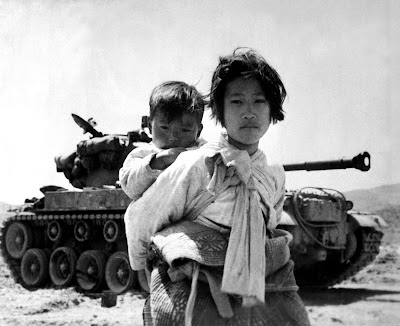
North Korean timeline towards Inevitable War
POLITICS - The following is timeline of events that have occurred on the Korean Peninsula. 1945 - Japan surrenders to the United States a... |

|
Judgment Day is Tomorrow, so sayeth Cult
RELIGION - According to a cult based in California, Judgement Day is tomorrow (May 21st 2011) and Jesus Christ will return to the Earth a... |

|
Sex in Space Forbidden
SEX/TECHNOLOGY - Sex in outer space is a big no-no according to NASA. Not for professional astronauts at least, but the growing numb... |
Popular Posts / Last 30 Days
-
 CANADA - I am henceforth boycotting Yak Canada and encouraging other people to do the same. A telemarketer from Yak Canada called me on my...
 -
 CANADA / ENTERTAINMENT - Canadian directors the Purchase Brothers have created a video called "Escape from City-17" that has gone...
 -
 CARS - The recently unveiled GM Volt Hybrid car is claiming to have a 230 mpg fuel consumption. The math assumes the car travels 40 miles (...
 -
ENTERTAINMENT - A few years ago we published an article in the Entertainment eZine about the Pillow Fight League . At the time we just thou...
-
 POLITICS - Russia has begun delivering S-300 air defence systems to Iran which could help repel any Israeli and United States air strikes...
 -
 ENVIRONMENT - The Obama administration today called for enhanced protection of the Earth's polar regions, proposing mandatory limits on...
 -
 POLITICS - Today Barack Obama approved a daring rescue operation to save an American captain who has been held hostage by pirates during a ...
 -
 ENVIRONMENT - IKEA and Wal-Mart are both going green on the rooftops of their shopping centers across North America, but the difference is ...
 -
 HEALTH - UPDATE: Health officials say 105 more people have died since Saturday, bringing the total to 442 as of November 3rd. Haiti is suff...
 -
 POLITICS - Kim Jong Il, the Great Leader of North Korea , is dying and only North Korean doctors have any clue when the event might take pl...
